
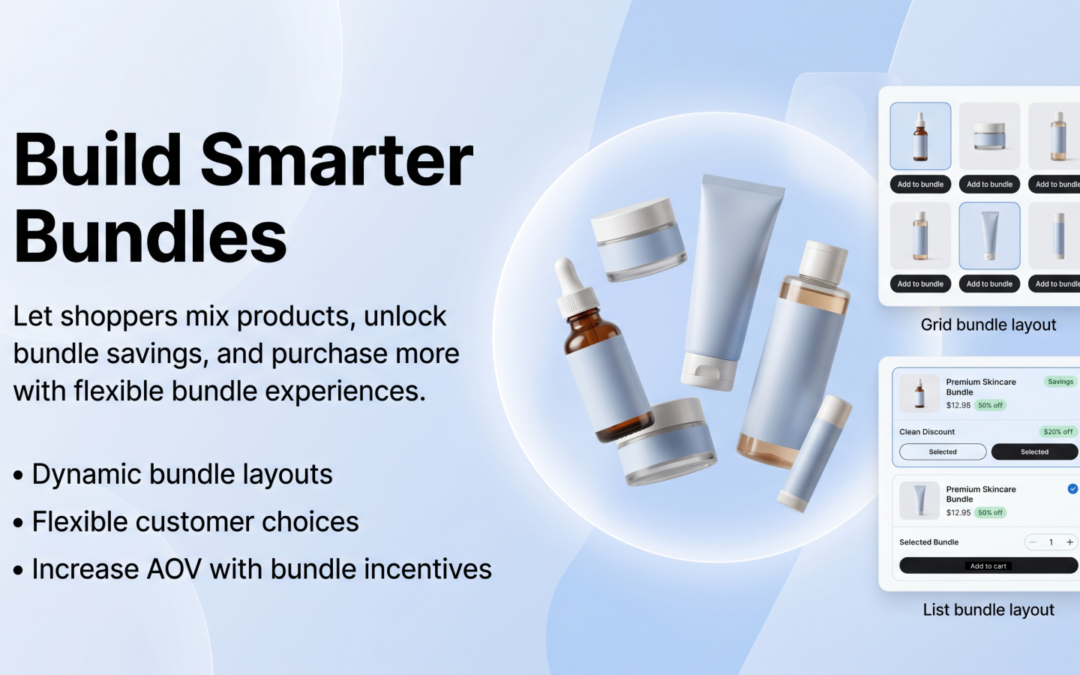
Getting customers to your Shopify store is important. However, getting them to add more products to their cart can be an entirely different challenge. A customer may visit your store, find exactly what they were looking for, add one product to the cart, complete the purchase, and leave. From the merchant’s perspective, the sale is successful. Still, there may have been an opportunity to turn that one-product order into a much larger purchase. This happens frequently when a store sells products that naturally go together.
For example, someone buying a camera may also need a memory card, a camera bag, or an extra battery. Similarly, a customer purchasing shampoo may also need conditioner and a hair mask. A clothing shopper buying a shirt might also be interested in matching pants or accessories. The products are related, but customers won’t always put them together on their own. That is where product bundling can make a real difference.
With Eazy Bundles, Shopify merchants can combine related products into fixed bundles, give customers the freedom to create their own combinations, or encourage larger purchases through volume-based offers.
The Problem: Customers Often Buy Less Than They Need
Consider a skincare store that sells:
- Cleanser — $18
- Serum — $24
- Moisturizer — $22
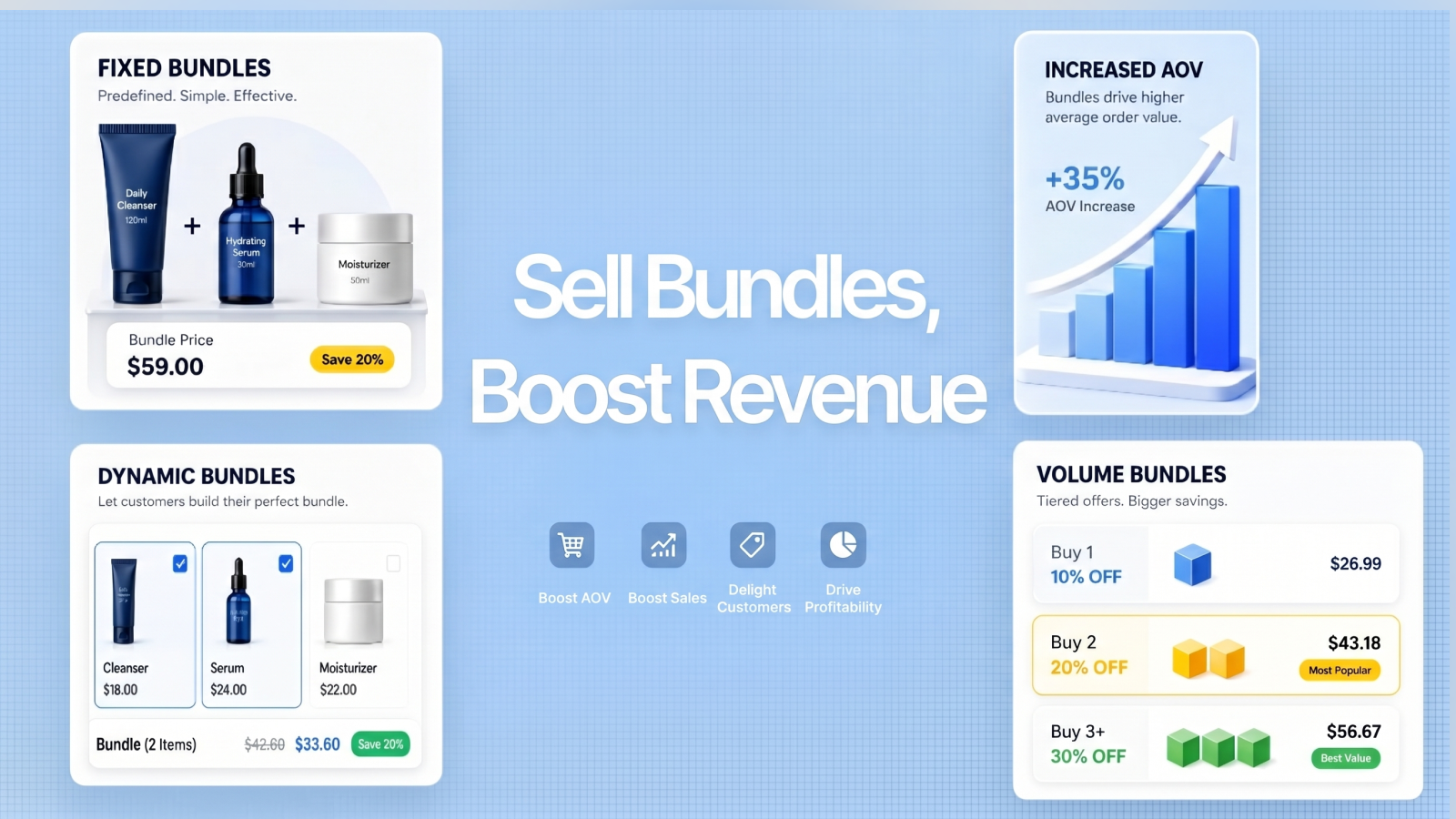
A customer may visit the store and purchase only the cleanser for $18.
Of course, there is nothing wrong with that order. However, if the customer also needs a moisturizer and sunscreen, the merchant has potentially missed an opportunity to increase the value of that purchase. The problem isn’t necessarily a lack of products. In fact, the products the customer needs may already be in the store. The real issue is that they are being presented as separate purchases rather than as part of a useful solution.
For example, instead of simply showing:
Cleanser — $18
the store could present:
Complete Skincare Routine
Cleanser + Serum + Moisturizer
Get everything you need in one bundle.
Now the customer isn’t just looking at another product. They are seeing a solution to a problem. And, more importantly, they have a clear reason to consider adding multiple products to their order.
The Bigger Challenge: Increasing Order Value Without Depending Only on More Traffic
More traffic is always useful. However, bringing more visitors to your store isn’t the only way to grow sales. You should also look at what happens after customers arrive. Imagine two Shopify stores that each receive 1,000 orders. The first store has an average order value of $35. The second has an average order value of $50. Both stores have the same number of orders, yet the second store generates more revenue from each purchase. That is why Average Order Value (AOV) is an important metric for Shopify merchants. Instead of focusing only on getting customers to buy one product, merchants can create opportunities for customers to purchase complementary products, multiple units, or complete product solutions. The goal, however, shouldn’t be to simply make customers spend more. A good bundle should give customers a reason to spend more because they are receiving something useful in return.
Turn Individual Products Into Complete Solutions
One of the simplest ways to approach bundling is to stop thinking about products individually. Instead, think about what the customer is actually trying to accomplish.
For example, a fitness store might sell:
- Resistance bands
- Yoga mat
- Water bottle
- Training gloves
- Exercise towel
Each product can be sold separately. However, the merchant could also create a Home Workout Starter Bundle containing several of these products.
Now the customer doesn’t have to think:
“Which products do I need for my workout?”
Instead, they can think:
“This bundle gives me the basic equipment I need.”
That small change in presentation can make the shopping experience much easier. At the same time, it gives the merchant another way to increase the value of the order using products that are already in the store.
When Customers Need a Reason to Buy More
Another common problem is quantity. A customer may genuinely need three units of a product, but if there is no benefit to buying them together, they may simply purchase one now and come back later.
Consider a coffee store selling:
1 Bag — $20
A customer may buy one bag and leave.
However, the merchant could introduce a volume offer:
1 Bag — $20
2 Bags — $36
3 Bags — $48
Now the customer has a clear reason to increase the quantity. This is where volume bundles and quantity breaks become useful. Rather than offering a discount to everyone, merchants can connect the incentive directly to purchasing more. As a result, the customer receives better value, while the merchant gets an opportunity to increase the number of products in each order.
Different Problems Need Different Bundle Strategies
Not every merchant has the same goal. One store may want to increase AOV. Another may want to move inventory. Someone else may want to encourage customers to purchase multiple units. Because of that, using only one type of bundle may not be enough.
This is where Eazy Bundles can give merchants more flexibility.
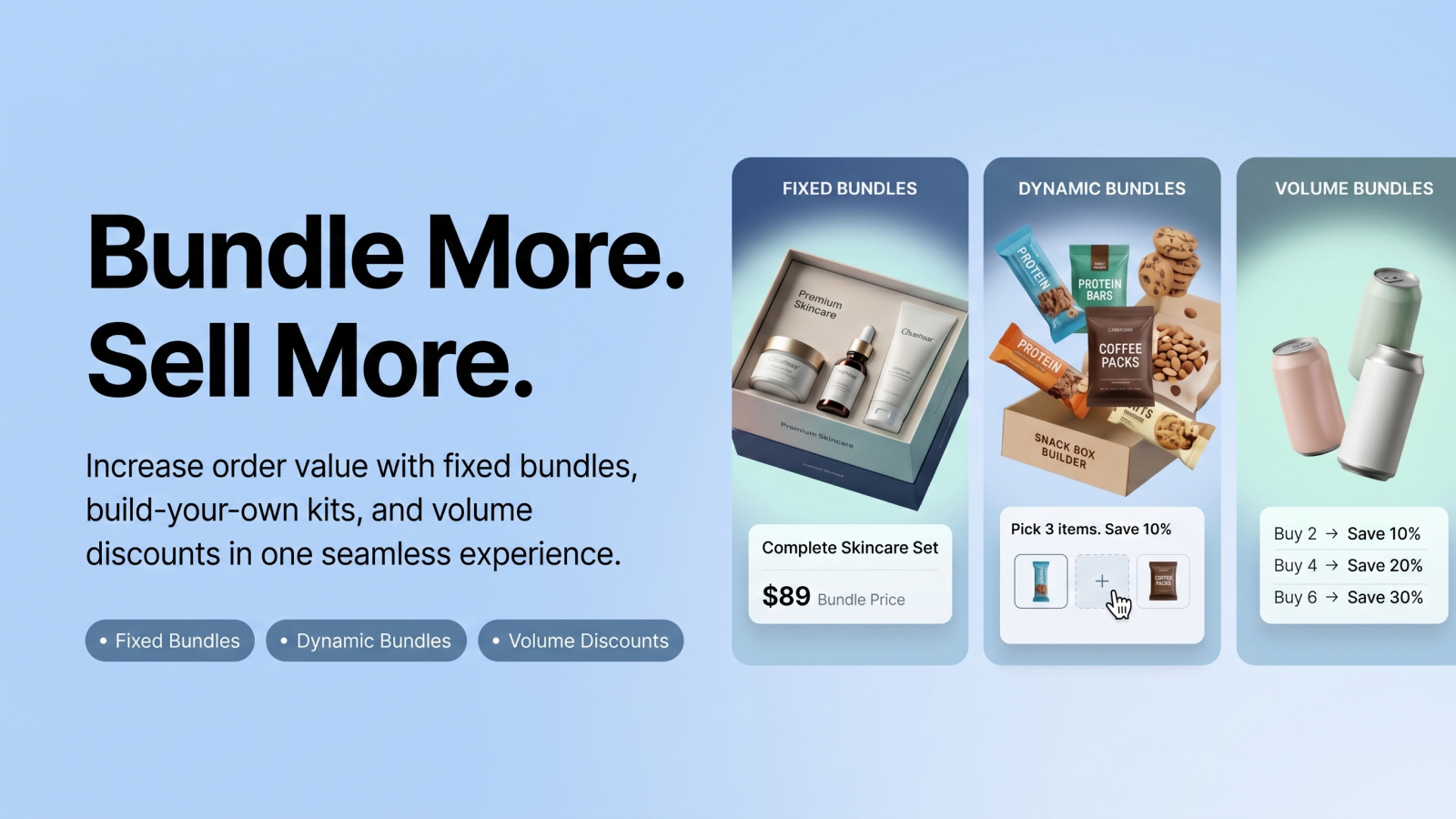
Fixed Bundles for Products That Naturally Belong Together
Fixed bundles work well when several products form a logical combination.
For example:
Skincare Essentials
- Cleanser
- Serum
- Moisturizer
- Sunscreen
The merchant decides what belongs in the bundle, while the customer gets a convenient complete package. This approach works particularly well for product sets, starter kits, gift packages, and complete solutions.
Dynamic Bundles: Give Customers the Freedom to Choose
Not every customer wants a pre-made bundle. Sometimes, they want to choose the products that best fit their needs. Dynamic bundles solve this problem by giving shoppers more control over what they add to their bundle.
For example, a skincare store could let customers choose any 3 products from a selection of cleansers, serums, moisturizers, and masks. One customer might choose a cleanser, serum, and moisturizer, while another might prefer a cleanser, mask, and serum.
As a result, customers get a bundle that feels personal to them, while merchants can still encourage larger orders and increase the value of each purchase.
With Eazy Bundles, merchants can use dynamic or mix-and-match bundles to create flexible offers without forcing every customer into the same product combination.
Volume Bundles for Larger Quantities
Finally, volume bundles are useful when merchants want to encourage customers to buy more units.
For example:
Buy 1 — Regular Price
Buy 2 — Save More
Buy 3 — Save Even More
The customer gets a better deal as the quantity increases. Meanwhile, the merchant has a simple way to encourage larger purchases.
One App, Multiple Merchant Goals
The real value of bundling isn’t limited to discounts.
Instead, merchants can use bundles for several different purposes, including:
- Increasing average order value
- Encouraging complementary purchases
- Moving slow-moving inventory
- Encouraging customers to buy larger quantities
- Creating complete product solutions
- Making product selection easier
- Giving customers more purchasing flexibility
- Creating new offers from existing products
In other words, bundling can become part of a store’s overall merchandising strategy rather than simply being another promotional tactic.
You May Not Need More Products to Create More Offers
There is another opportunity that Shopify merchants sometimes overlook. You may already have enough products. Suppose your store has 20 products. You don’t necessarily need to launch another 10 products before you can create new offers. Instead, look at how your existing products can work together.
For example, the same catalog could be used to create:
Best Seller Bundle
A combination of your most popular products.
Starter Bundle
A simple option for first-time customers.
Premium Bundle
A larger combination for customers who want more.
Gift Bundle
A ready-made selection for gift shoppers.
Complete Collection
A broader bundle containing several related products. The products haven’t changed. What has changed is the way they are presented to customers. As a result, merchants can create new purchasing opportunities without constantly expanding their product catalog.
How Eazy Bundles Helps Solve These Problems
As a Shopify store grows, creating different bundle offers can become difficult to manage manually. Eazy Bundles gives merchants a simpler way to create different types of product bundle offers in one place.
With the app, merchants can create:
- Fixed product bundles
- Mix-and-match bundles
- Custom bundle experiences
- Volume-based offers
- Quantity breaks
- Discount-based bundle promotions
Therefore, instead of treating every product as an isolated sale, merchants can create purchasing options that encourage customers to buy complementary products, choose multiple items, or purchase larger quantities.
More importantly, merchants can choose the bundle strategy based on the problem they are trying to solve.
Make More From the Traffic You Already Have
Getting people to your Shopify store will always be important.
However, once customers arrive, the next question is just as important:
How much value can you create from each purchase?
- If customers are consistently buying only one product, there may be an opportunity to rethink how related products are presented.
- If inventory is moving slowly, there may be an opportunity to combine those products with stronger sellers.
- If customers need multiple units, there may be an opportunity to reward larger purchases.
- And if customers don’t know which products they need together, a well-planned bundle can make that decision much easier.
That is ultimately where Eazy Bundles can help.
Instead of simply adding more products to your store, you can create smarter ways to sell the products you already have.
Ready to Create Smarter Product Offers?
Use Eazy Bundles to create fixed, mix-and-match, and volume bundle offers designed around how your customers actually shop.